Centuries in a Bottle
Some ingredients arrive with history; Others arrive carrying centuries.
The olive oil we use at Dieci Boutique Restaurant belongs to the latter.
Long before any of us were born.
Long before our restaurant existed.
Long before Bulgaria and Greece became modern nations.
Long before roads connected villages and travelers crossed borders with ease.
These trees were already standing. They still are.
On the western slopes of Mount Pelion, overlooking the waters of the Pagasetic Gulf and the Aegean Sea beyond, three hundred ancient olive trees continue producing fruit exactly as they have for generations.
The trees belong to the Amphissa variety, one of Greece’s oldest and most respected cultivars. Their average age is approximately two hundred and fifty years.
To put this into perspective, many of these trees were already mature before the first steam locomotive appeared in Europe. Empires have risen and disappeared during their lifetime. Borders have changed. Governments have changed. The trees remained.
Today, they are cared for by six Bulgarians. Not investors. Not industrial producers. Not agricultural corporations. Three families. Friends. Caretakers. And perhaps that distinction matters more than anything else.
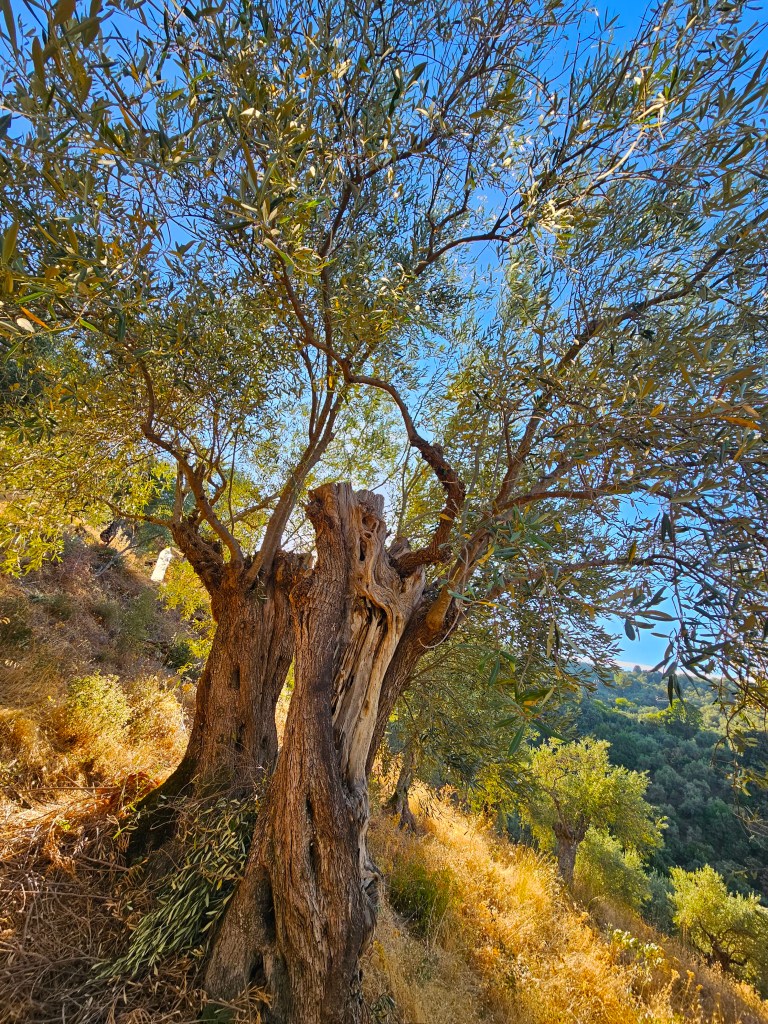
Some trees produce olives. Others produce history.
Pelion
There are places where agriculture feels inevitable. Pelion is not one of them. The olive grove lies near the village of Afetes in southwestern Pelion, within Greece’s Thessaly region. The terrain is steep. Rocky in places. Demanding.
The grove sits approximately 260 meters above sea level, only 1.6 kilometers from the warm waters of the Aegean. Every element of the landscape contributes to the final oil. The sea moderates temperature. The mountain creates elevation. The wind circulates through the slopes. Rain arrives more generously than in many other Greek olive-growing regions.
Together, these conditions create something special. Not abundance. Balance. The olives ripen slowly. The fruit develops complexity. Freshness remains intact. The resulting oil carries both power and elegance. The landscape writes itself into the fruit.
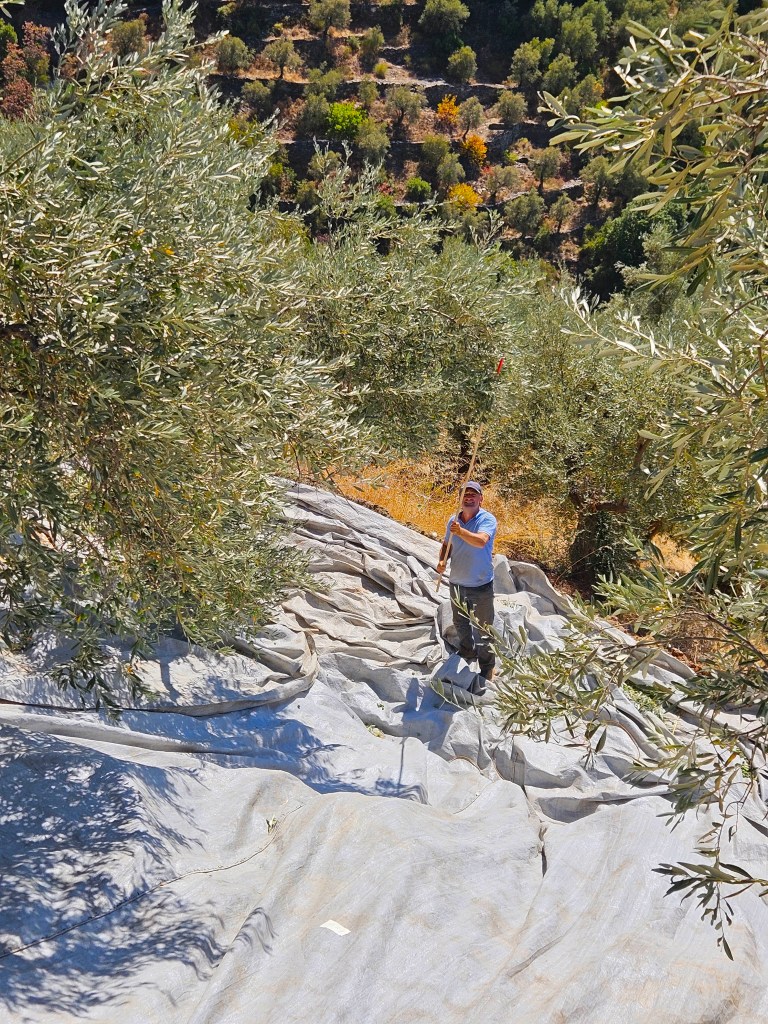
Between mountain and sea.
Three Hundred Trees
Modern agriculture often speaks the language of scale. Thousands of hectares. Millions of bottles. Industrial efficiency. This grove speaks a different language. Three hundred trees. That is all. No expansion plans. No production targets. No ambition to become larger. Only a commitment to care properly for what already exists.
The families work entirely by hand. Every task. Every season. Every tree. Manual labor remains at the center of the process. The trees receive only organic nutrition. No shortcuts. No aggressive interventions. No attempt to force production beyond what nature willingly provides. The objective is not maximum yield. The objective is stewardship.
Because when a tree has survived two and a half centuries, ownership becomes an illusion. You do not truly own such a tree. You care for it temporarily.
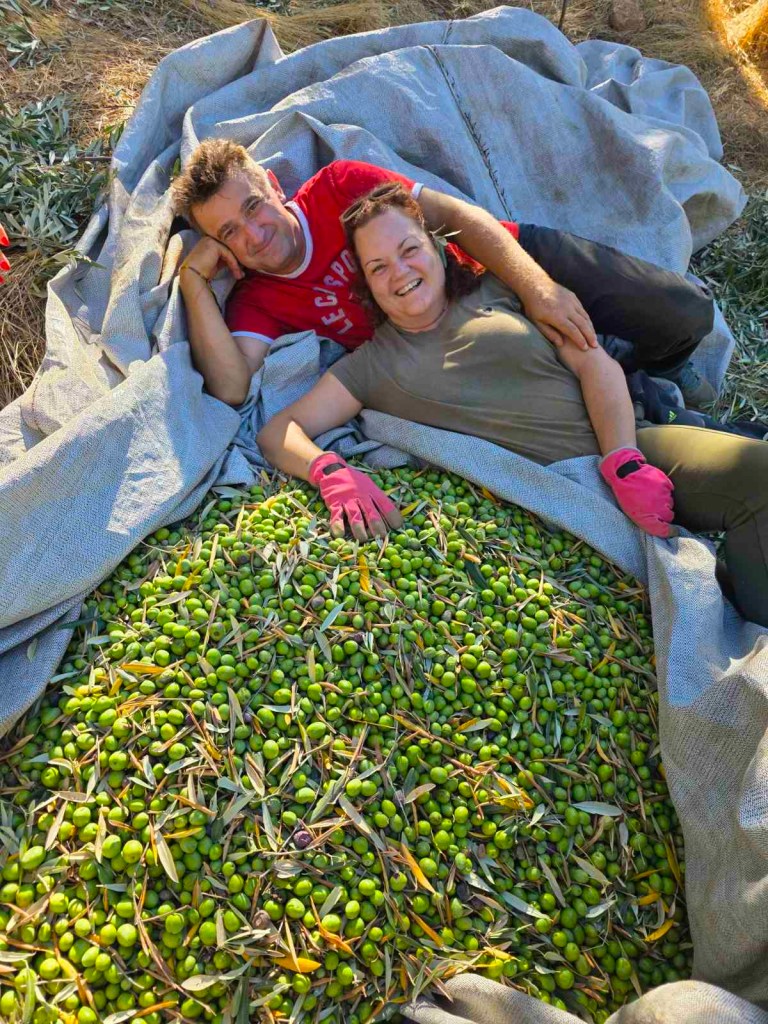
Caretakers rather than owners.
The Economics of Patience
One of the most revealing aspects of this olive oil is what the producers deliberately choose not to do. Most commercial olive oil production follows a simple economic principle. Wait longer. Harvest later. Increase yield. Produce more oil from the same fruit.
The mathematics make sense. The flavor often suffers. Megi, Delcho, and their friends choose the opposite approach. Every year, they begin harvesting at the end of September. Very early. The olives are still young. Mostly green. Only beginning to show hints of violet.
From a commercial perspective, this decision reduces output. The trees could produce more. The grove could generate higher returns. The producers knowingly reject that possibility. Because they are chasing quality rather than quantity. This decision defines the entire oil.
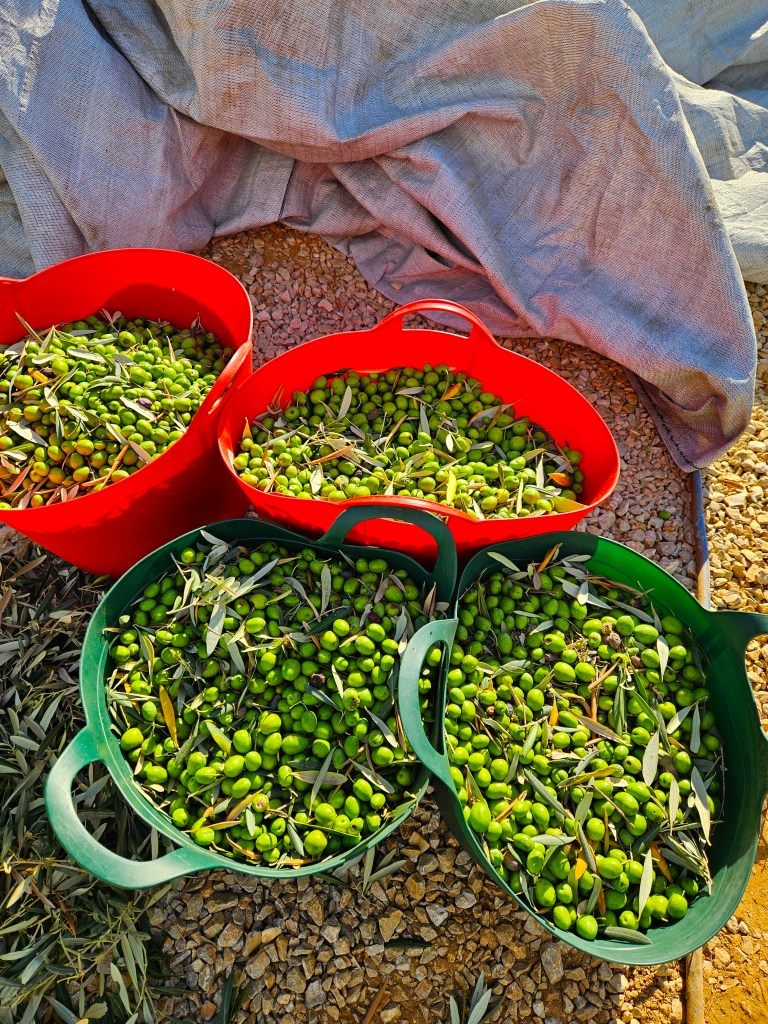
Harvested for quality, not yield.
One Day
The most important day of the year begins before sunrise. The harvest starts early in the morning. The olives are picked by hand. Not shaken mechanically. Not stripped rapidly from branches. Collected carefully. Respectfully. Methodically. And then something critical happens.
The olives are pressed the very same day.
No waiting.
No storage.
No delay.
The fruit travels directly to a family olive mill near Afetes. Within hours, olives become oil. This speed preserves freshness. Preserves aromatics. Preserves identity. Every additional hour matters. The producers understand this. The mill understands this. The result reveals itself immediately.
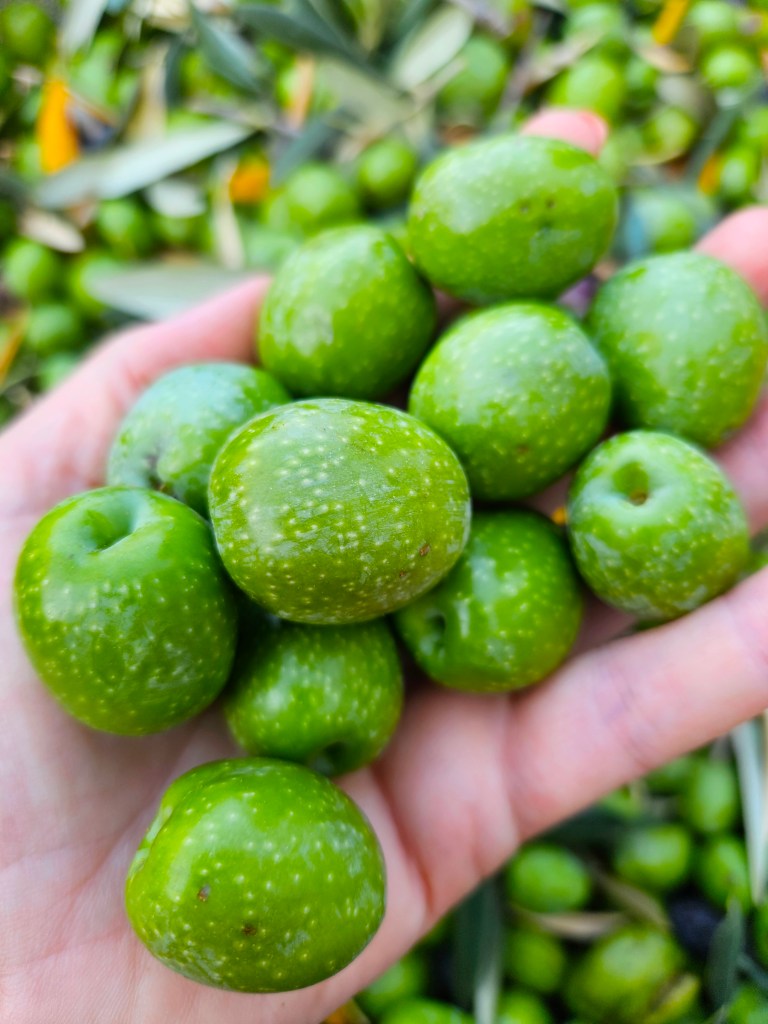
The most important day of the year begins before sunrise.”
Green
The first thing people notice is the color. The oil appears vividly green. Alive. Bright. Almost luminous. This is not an accident. Nor is it cosmetic. The color reflects the harvest decision.
Early-picked olives contain higher concentrations of chlorophyll and phenolic compounds. The result is an oil that behaves differently. The aroma becomes more intense. The structure becomes more vibrant. The nutritional profile becomes stronger. Most importantly, the oil tastes alive. Not soft. Not tired. Not generic. Alive.
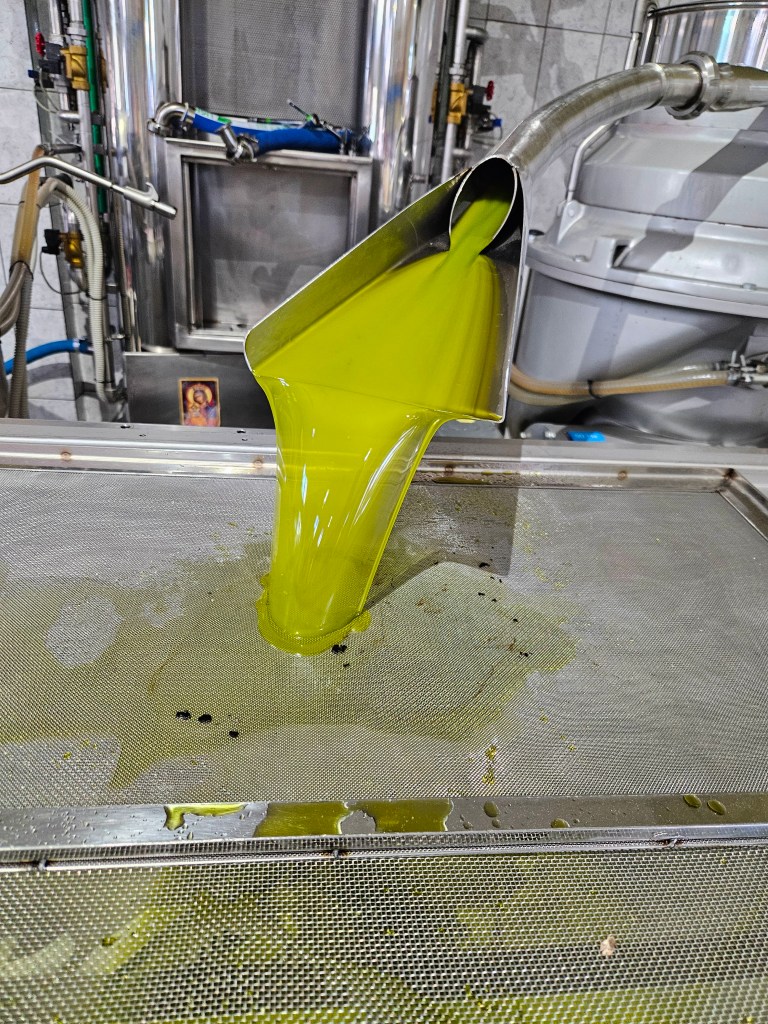
Green is the color of a decision.
Unfiltered
Modern consumers are often taught to associate clarity with quality. Clear wine. Clear broth. Clear oil. The assumption is understandable. And sometimes wrong.
This olive oil remains unfiltered. The cloudiness visible in the bottle is intentional. Natural. Authentic. Tiny particles remain suspended within the oil. Occasionally a slight sediment appears at the bottom. This is not a defect. It is evidence.
Evidence that the oil has not been stripped of its character in pursuit of visual perfection. The producers prioritize integrity over appearance. At Dieci, we understand that philosophy intimately. Because we operate the same way.
Stunning image captured by VelislavVelislav professional photographer, filmmaker, and editor from Plovdiv, Bulgaria. Lyon Visuals
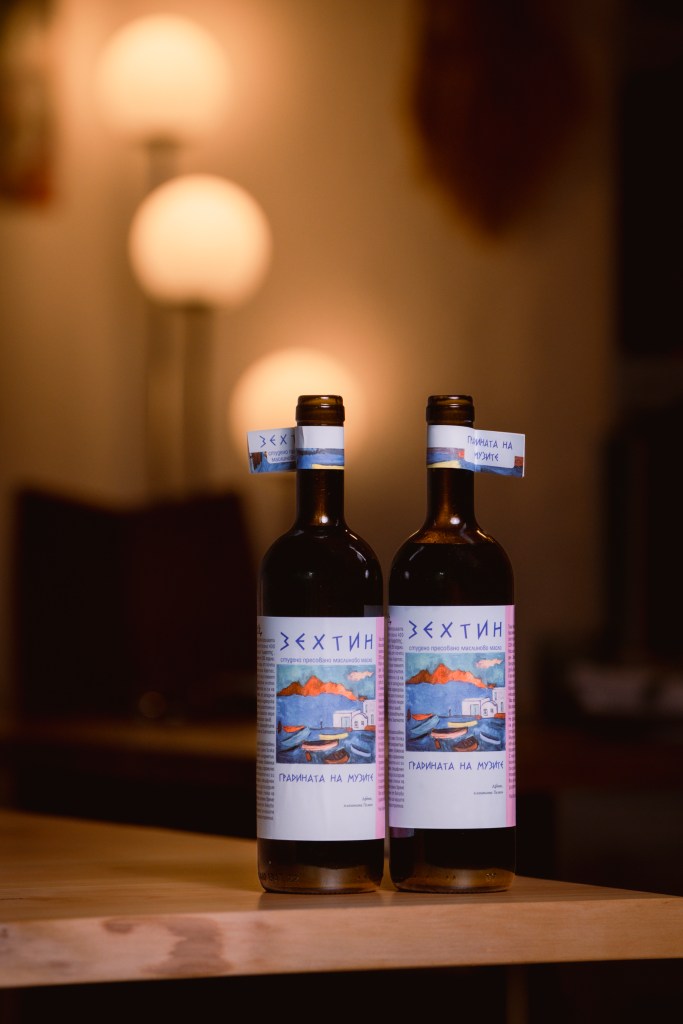
Not filtered. Not corrected. Not disguised.
The Taste of a Place
Every serious olive oil should tell a story. This one tells several. The aroma arrives first. Freshly crushed tomato leaves. Green herbs. Wild vegetation. The scent of harvest itself. Then comes the palate. Fresh. Vibrant. Slightly tart. Focused. And finally the finish.
A pleasant peppery sensation moving gently through the throat. That pepperiness matters. It often indicates the presence of polyphenols.
The compounds responsible for many of olive oil’s most celebrated health benefits. The sensation is not aggressive. It is alive. A reminder that this oil comes from fruit harvested before compromise began.
Stunning image captured by @annavandorp, professional photographer, filmmaker, and editor from Amsterdam, Netherlands. https://www.frankcollective.nl/
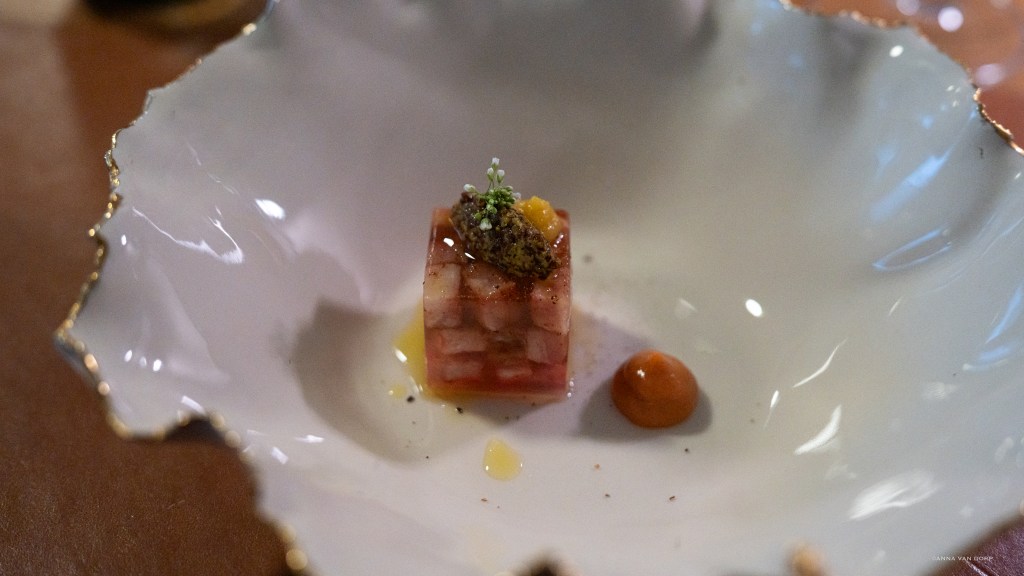
The flavor of patience.
Why We Use It
At Dieci, ingredients must earn their place. Not through prestige. Through meaning. This olive oil arrives from another country. Yet its story feels familiar. Small-scale production. Manual labor. Respect for tradition. Quality over quantity. Stewardship over ownership. These values align perfectly with our own. The oil is not merely an ingredient. It is a philosophy. One that happens to taste extraordinary.
Stunning image captured by @annavandorp, professional photographer, filmmaker, and editor from Amsterdam, Netherlands. https://www.frankcollective.nl/
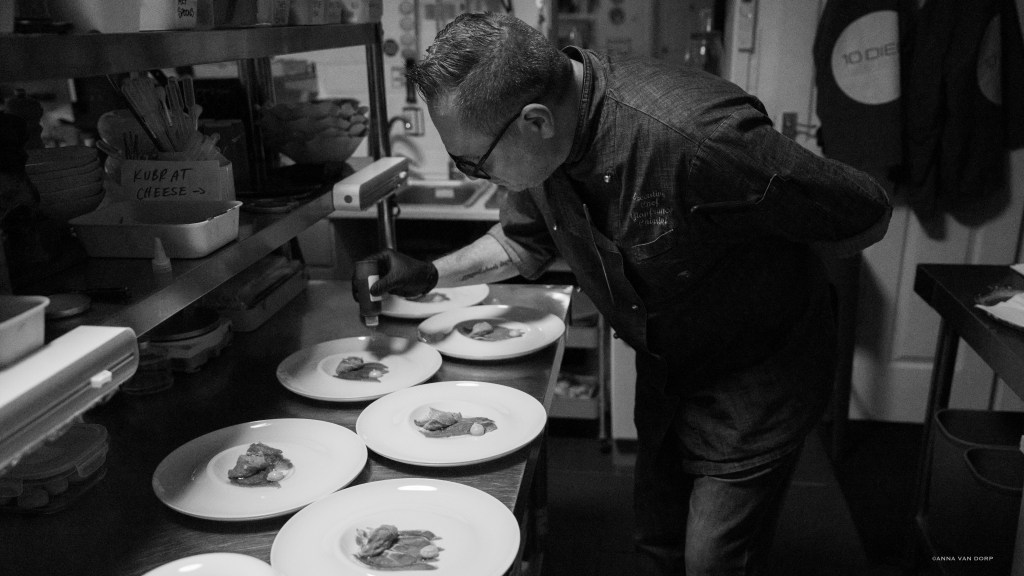
The final ingredient is often the simplest.
The Trees Will Remain
One day, all of us will be gone. The chefs. The guests. The producers. The writers. The readers. The trees may still be standing. That thought changes perspective. Suddenly production statistics seem less important. Marketing becomes less important. Awards become less important. What matters is continuity. Care. Responsibility. The willingness to leave something healthy for whoever comes next. That is the true lesson of these olive trees. Not how to make olive oil. How to think in centuries.
And every time we open a bottle at Dieci, we are reminded of that lesson. Three hundred trees. Two hundred and fifty years old. Still producing. Still teaching. Still waiting for the next harvest.
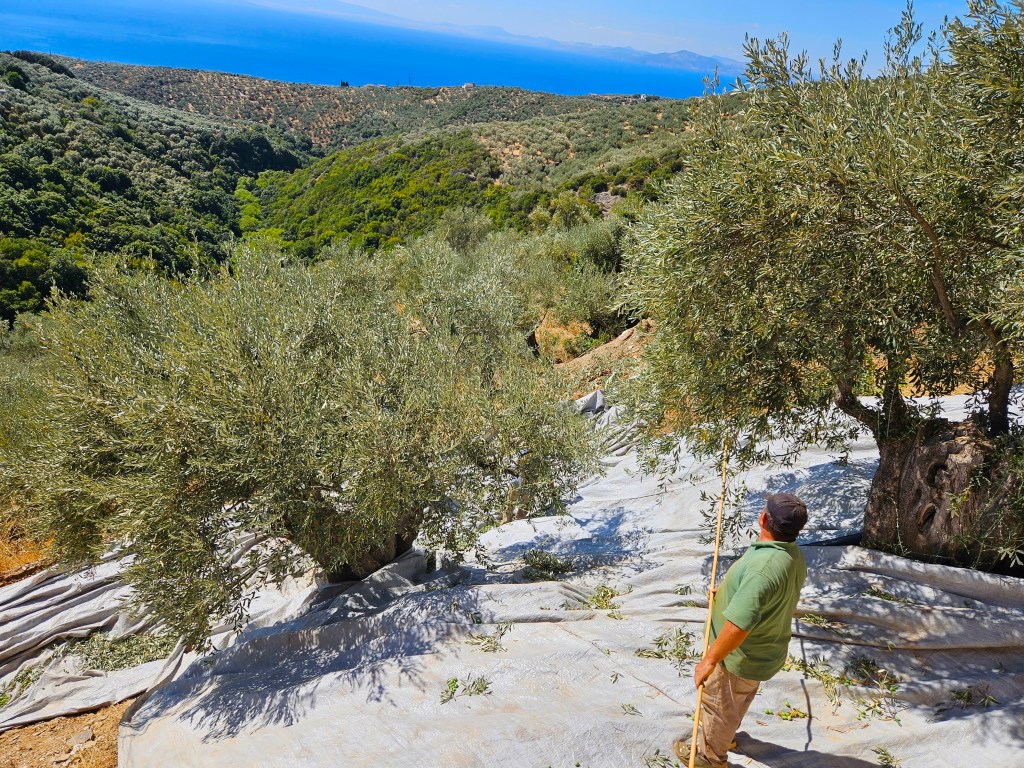
Some lessons require centuries to write.”


Leave a Reply